Email remains the central hub of corporate communication. But in 2026, professionals face a radically different environment: artificial intelligence drafts responses, sorts inboxes, detects patterns, and automates routine work. At the same time, concerns about data privacy, retention, and erosion of trust are rising. In the DACH region (Germany, Austria, Switzerland), companies show an especially sensitive approach to corporate data — shaped by strict regulatory frameworks and a business culture that values safety over speed.

This article explains what professionals in the German-speaking market expect from modern AI-powered email tools — and how vendors can meet these standards. It also outlines U.S. privacy equivalents and legal concerns relevant to multinational organizations.
Why Professionals Do Not Want Their Emails Stored
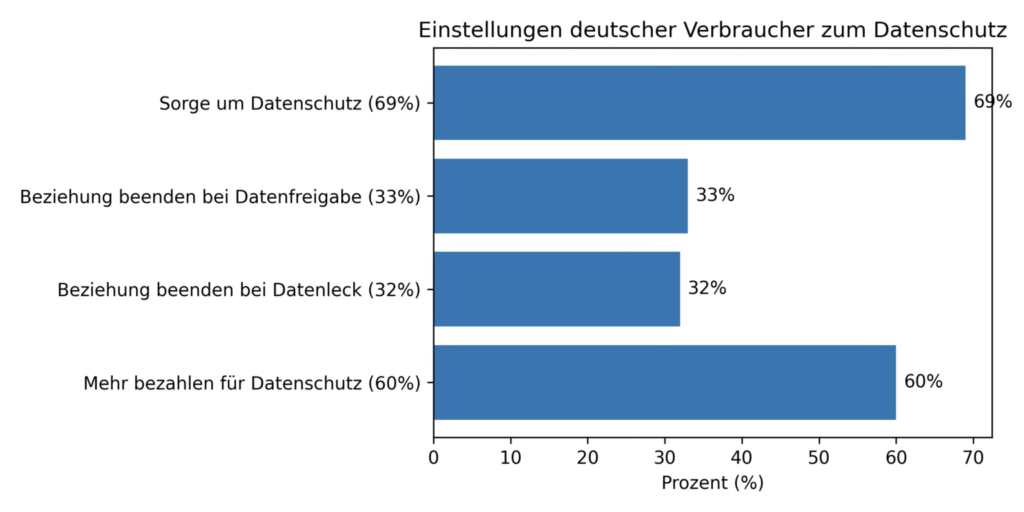
Concerns about personal data in Germany are higher than ever. According to an OpenText survey, 69% of Germans worry about how their data is processed in a “post-pandemic world.” For one-third of respondents, the transfer of personal data would be a reason to end a business relationship; 32% would do the same if their data were insufficiently protected. Furthermore, 60% would pay more for a company that treats data protection seriously.
These concerns closely mirror U.S. consumer sentiment under the California Consumer Privacy Act (CCPA) and California Privacy Rights Act (CPRA), where users demand transparency, deletion rights, and restrictions on data sale or reuse. In regulated U.S. industries — e.g., healthcare (HIPAA), finance (GLBA), and education (FERPA) — the expectation is even stricter: email content must not be repurposed, mined, or retained beyond operational necessity.
Technical concerns compound this. Many large email providers scan messages to enable “smart features,” classification, or model improvement. This means that emails are unpacked, analysed, and stored — at least temporarily — on the provider’s servers. Convenience comes at the expense of data sovereignty: sensitive communication remains on foreign infrastructure, creating risk of unauthorized access, data breaches, or even government subpoenas under U.S. law (the third-party doctrine allows authorities to compel cloud providers to disclose stored data).
Local email clients such as Mailbird take the opposite approach: all emails, attachments, and personal information remain solely on the user’s device. The company itself has no access to the content, even if compelled by law enforcement. This architecture eliminates the central risk inherent in cloud-based providers: messages do not reside on the provider’s servers and therefore cannot be extracted, subpoenaed, or misused.
Professionals in regulated fields — legal, medical, financial, cybersecurity — simply cannot accept storage of their correspondence on third-party servers. Even less regulated companies increasingly face liability exposure when storing unlimited email archives. The fewer data exist, the smaller the attack surface and the easier compliance becomes — whether under GDPR in Europe or CCPA/CPRA and emerging U.S. state privacy laws (e.g., Colorado, Virginia, Connecticut).
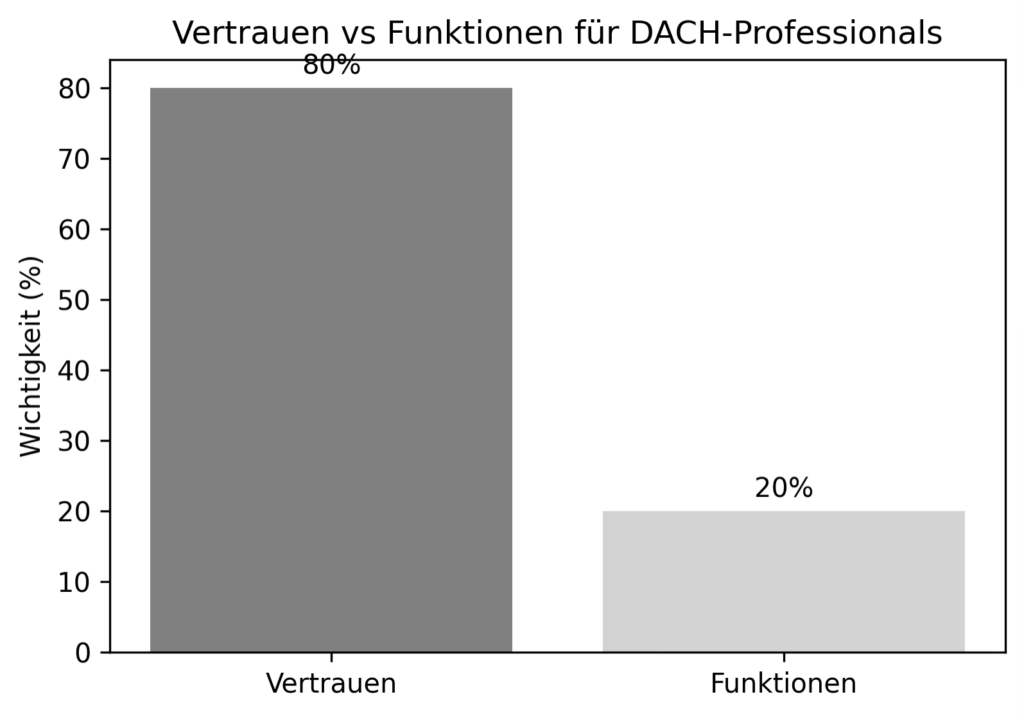
Trust Over Features – The DACH Principle
The DACH region is known for a risk-averse business culture. Gregor Hufenreuter notes that German enterprises aim for long-term partnerships, where quality and reliability outweigh speed. Sales cycles take longer because trust must be established. Vendors who cannot convincingly articulate how they mitigate risk face resistance.
This caution translates directly into expectations for AI tools. Companies do not want a black box with unclear data routes. Instead, they expect:
- reliability
- precision
- punctuality
- verifiable transparency
This mirrors U.S. enterprise expectations around auditability, SOC-2, ISO-27001, and data residency guarantees. Emotional marketing or aggressive promises fail in DACH, whereas fact-based arguments and long-term credibility win.
Localization is another factor: many professionals prefer German-language materials. English is widespread but not always persuasive. Regional nuances within Germany, Austria, and Switzerland require linguistic sensitivity.
Transparent AI: Privacy Without Interference
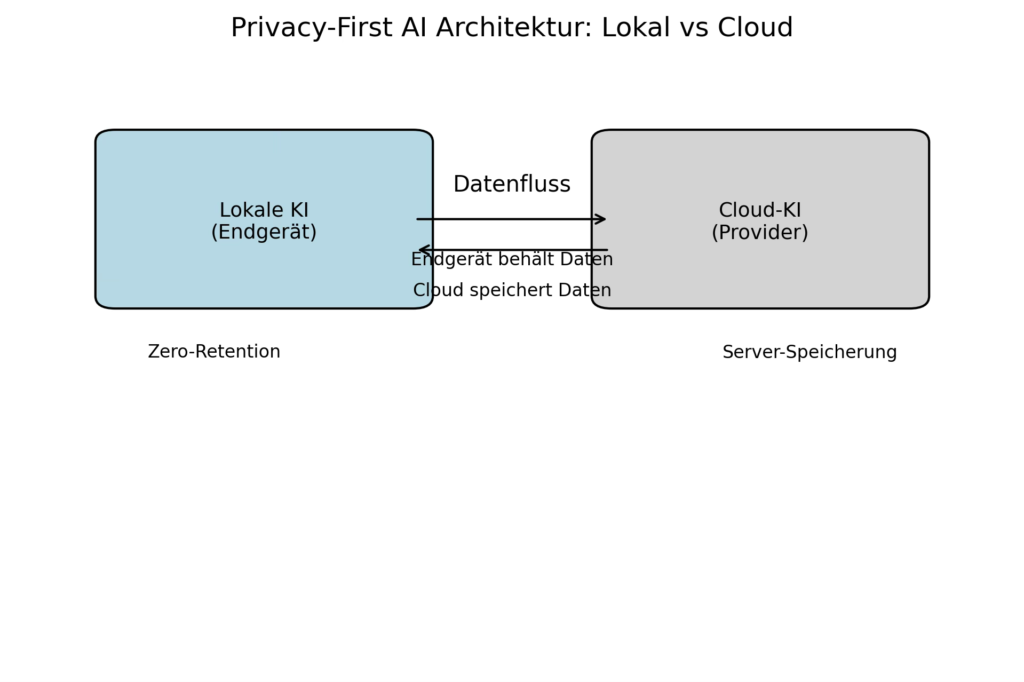
Most AI email assistants today operate “cloud-first”: emails are uploaded to the provider’s server, decrypted, analysed, and potentially stored for training or optimization. Even with encrypted transmission, the processing happens in plaintext on the server. Some providers claim not to use data for advertising, but still reserve the right to use it for model improvement — often opt-out rather than opt-in.
A privacy-first approach requires a different architecture. Processing must happen either locally or in a zero-access environment: the content stays on the device, the model runs locally or in an environment where the provider cannot read the data, and only anonymous metadata — or nothing — leaves the machine.
AtomicMail’s analysis distinguishes between AI systems that process data in the cloud and those that run directly on the user’s device. The distinction matters: on-device AI protects user control and eliminates subpoena risk; cloud AI, under U.S. law, may be subject to provider disclosure obligations.
Privacy-First AI Today: What Does It Mean?
A practical checklist:
- Business model: Ad-supported platforms monetize data; subscription-based services have incentives to preserve privacy.
- Location of processing: Local vs. cloud makes a difference for GDPR, CCPA, CPRA, and data residency compliance.
- Training policy: Privacy-first vendors do not use your correspondence for training or fine-tuning.
- Encryption: End-to-end or zero-access encryption ensures even the provider cannot inspect messages.
- Scope of AI features: The narrower the scope (e.g., only processing drafts), the lower the risk.
- Transparency: Vendors must disclose how models work, which data are processed, and retention periods.
In DACH, transparency and explicit contractual guarantees matter most. In the U.S., equivalents include Data Processing Addendums (DPAs), Business Associate Agreements (BAAs) under HIPAA, and privacy notices under CCPA/CPRA.
Conclusion: Expectations for 2026
In 2026, modern AI-powered email tools will be judged not only by functionality, but by how they handle data. Professionals in Germany, Austria, and Switzerland no longer accept the storage of confidential messages on third-party servers. They expect:
- zero-access or local processing
- no training on user data
- clear transparency and deletion policies
- compliance with GDPR, CCPA/CPRA, and sector-specific U.S. regulations
Trust — the central value of the DACH market — will depend on a vendor’s ability to credibly guarantee privacy. Companies that invest in privacy-first architecture and honest communication will build long-term customer relationships. Smart features matter, but never at the cost of data protection. Vendors who achieve both will have a competitive advantage in 2026.